
Dignity in Motion
Rethinking Patient Transport
By Melanie Tomlinson, Chief Operating Officer
Dignity in Motion: What We Heard at ICE San Antonio
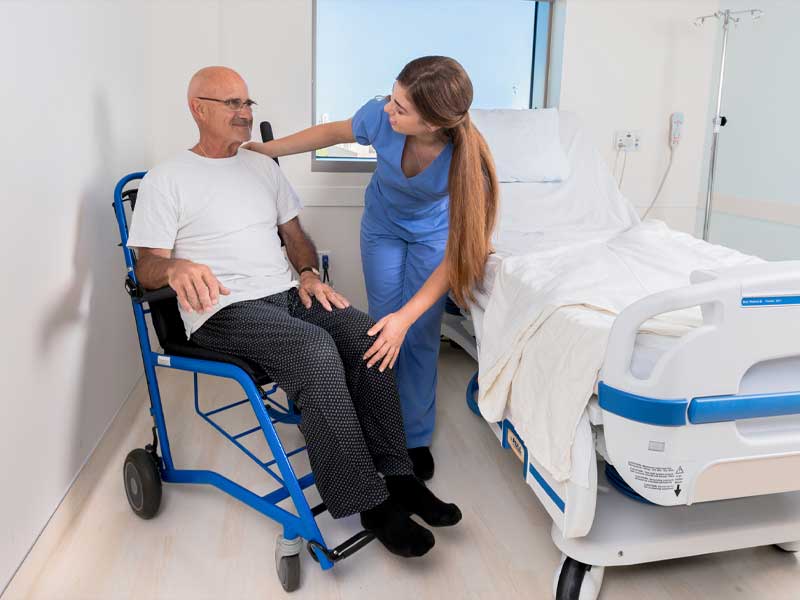
In February, we introduced our MR Conditional transport chair at the ICE Conference in San Antonio. We expected conversations around safety, compliance, and functionality. What stood out instead was something else entirely: dignity.
As imaging professionals interacted with the chair, that word came up again and again. Not efficiency. Not workflow. Dignity. It’s not something you usually hear first in discussions about equipment, but it’s something patients feel immediately.
The Small Moments That Shape the Experience
Healthcare environments move fast. Clinicians manage heavy workloads, complex systems, and constant pressure. In that context, small details can easily fade into the background. For patients, those details are the experience. Being transported in equipment that feels restrictive, feeling exposed or uncomfortable, or wondering if you truly fit in the space designed to care for you; these moments add up. They shape how care is experienced, not just how it is delivered.
When Design Sends a Message
One of the most consistent reactions we heard was tied to something simple: the chair’s wider, more open design. That design changes how a patient feels the moment they sit down. It removes the question of whether they will fit, reduces self-consciousness, and creates a sense of ease instead of tension. For many patients, especially those who have experienced limitations with standard equipment, that difference is immediate and meaningful. It’s not just about comfort. It’s about inclusion.
More Than Functionality
In imaging environments, equipment must meet strict standards. Safety and compliance are non-negotiable. But functionality alone is not the full picture. When equipment supports posture, reduces strain, and accommodates a wide range of patients, it does more than improve workflow, it supports a more respectful experience. Patients are not just being moved from one place to another. They are navigating moments where they may feel vulnerable, exposed, or uncertain, and the right design helps reduce that.
A Simple Question Worth Asking
We often measure success in efficiency, throughput, and outcomes. Those matter. But there’s another question worth asking: did this improve the patient’s sense of dignity? Because long after the process is complete, that’s what people remember.
What we heard at ICE was both encouraging and clarifying. Dignity should not be an afterthought. It should be part of how equipment is designed from the start. Every detail, from structure to scale to ease of use, plays a role. Because sometimes, improving care starts with something simple: making sure every patient feels like they belong.